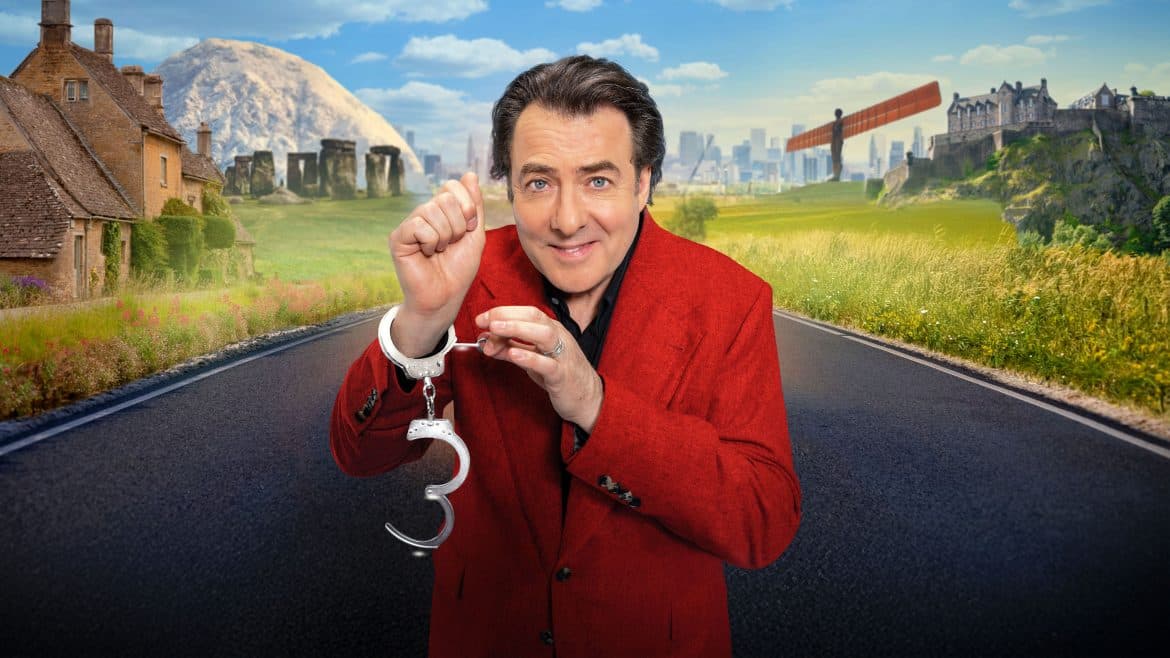
Handcuffed Last Pair Standing series two has officially been confirmed by Channel 4, with Jonathan Ross returning to host another run of the reality experiment that literally attaches strangers with opposing outlooks to one another around the clock.
The broadcaster confirmed the renewal after the first series became one of its notable new entertainment launches of 2026. The premise is deliberately simple and uncomfortable: pairs of strangers with sharply contrasting opinions, lifestyles and habits are handcuffed together 24 hours a day and challenged to remain connected while navigating everyday life, disagreements and a series of tasks.
Channel 4 describes the format as an “outrageous social experiment”, but underneath the spectacle sits a recognisably British reality-TV question: what happens when people who might normally avoid one another are given no option but to communicate?
The first series put that idea under considerable pressure. Contestants could not simply retreat from an argument or return to their own space, because their partner remained physically attached to them. That created moments of comedy and frustration, but also forced conversations between people whose assumptions about one another might otherwise have gone unchallenged.
According to Channel 4’s own audience reporting, the first series reached 4.5 million viewers across streaming and linear television within 28 days of transmission. That performance put the programme among the broadcaster’s prominent new formats this year and helps explain why a second civilian series is moving forward.
Jonathan Ross will again oversee proceedings. The presenter has spent decades across British television, from chat shows and film programmes to panel and entertainment formats, and his slightly mischievous presenting style proved a natural match for a programme built around unpredictable human reactions.
The first series ultimately ended with Rob, an adult content creator, and Charlie, described by Channel 4 as a practical homemaker, winning the experiment and sharing the £100,000 prize. Other combinations deliberately brought together people with markedly different backgrounds and perspectives.
The broadcaster has not yet announced the new contestants or a transmission date for Handcuffed Last Pair Standing series two. Those details therefore remain to come, and there is no confirmed new line-up to report at this stage.
What is confirmed is that Channel 4 sees considerably more life in the format. The programme forms part of a wider push by the broadcaster towards distinctive British unscripted television. In its 2025 annual report, Channel 4 highlighted Handcuffed: Last Pair Standing alongside formats including Secret Genius, The Hunt: Prey vs Predator and Apocalypse as part of its investment in original British entertainment ideas.
That strategy matters in a television landscape increasingly filled with internationally replicated formats and familiar returning franchises. Handcuffed is not subtle television, but its central mechanic is immediately understandable and gives producers a large range of possible pairings without fundamentally changing the programme.
It also depends heavily on casting. The handcuffs provide the visual gimmick, but the programme only works if the two people attached to one another have enough difference to generate tension while retaining enough willingness to engage for genuine conversation to emerge. Simply putting two people together to argue would quickly become exhausting; the more interesting moments come when initial assumptions begin to shift.
That tension between confrontation and connection is likely to remain central to series two. Channel 4 has repeatedly positioned itself as a broadcaster willing to put different parts of modern Britain on screen, and the format gives it an unusually literal way of doing exactly that.
The renewal also demonstrates the continuing value of entertainment programmes that generate conversation beyond their scheduled broadcast. Reality formats increasingly live simultaneously on television, streaming platforms and social media, where individual exchanges and unexpected moments can reach audiences who have never watched a full episode.
For Ross, the second series provides another prominent entertainment role alongside his established television work. For Channel 4, meanwhile, it turns an experimental first run into something potentially more durable.
The handcuffs, it seems, are staying on.