News · 28 August 2026
What Is a Dumpling Squishy? Inside the Viral Toy Taking Over Social Media
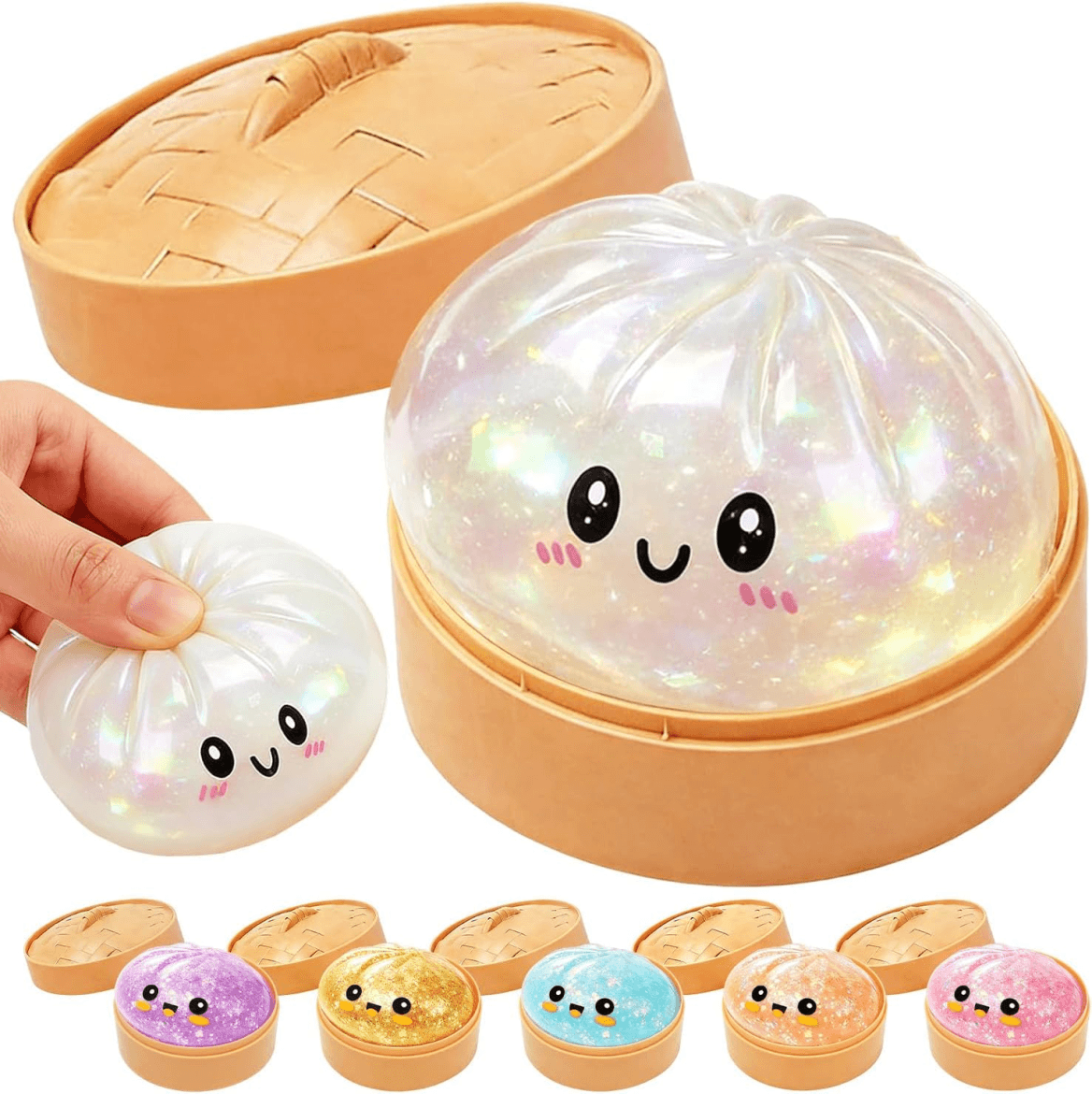
Dumpling squishy toys have become one of 2026’s strangest viral obsessions. Scroll through TikTok, Instagram Reels or YouTube Shorts and there is a good chance you will eventually encounter somebody squeezing what looks like a tiny steamed dumpling, watching it collapse under their fingers and then slowly puff itself back into shape.
It sounds ridiculous. It is also remarkably satisfying to watch – and that combination has helped turn a simple sensory toy into a full-blown collecting trend.
The interest is now spilling from social media into Google. UK Google Trends data supplied to GlitterBeam for the past 24 hours shows searches clustering around terms including “RMS dumpling”, “RMS squishy dumpling”, “mystery dumpling squishy” and “squishy dumplings”. Related searches including “Taba squishy” and “NeeDoh” were also showing breakout interest, suggesting people are no longer simply watching the videos: they are actively trying to work out what these toys are and where they come from.
What exactly is a dumpling squishy?
At its simplest, a dumpling squishy is a soft sensory or fidget toy shaped to resemble a cute dumpling or bao. You squeeze it, flatten it, poke it or deform it, and the material gradually returns towards its original plump shape.
There is not one universal “dumpling squishy”. Several brands and manufacturers now sell variations using different materials and constructions. That distinction matters because viral videos often lump RMS/Crazy Fun products, Taba-style squishies and other slow-rise toys into one category.
Manchester-based RMS Group describes its Crazy Fun Squishy Dumpling as the original viral mystery product in its range. RMS’s abeec toy site says genuine versions can be identified by RMS and Crazy Fun branding on the packaging. TABASQUISHY, meanwhile, sells its own dumpling collection and says its products use soft silicone. Other sellers list products made from materials including TPR and PU.
In other words, “dumpling squishy” has effectively become the name of the trend as much as the name of any particular toy.
How does a dumpling squishy work?
The appeal comes from resistance and rebound. When compressed, the soft material gives way rather than immediately springing back like a conventional rubber ball. Depending on the product, it then slowly recovers its shape.
That creates the characteristic moment seen repeatedly in social videos: a perfectly round dumpling gets dramatically flattened, stretched or squeezed, then appears to inflate back into its original form.
There is no electronics, app or clever mechanism hidden inside. The material itself creates the effect. Different products feel noticeably different, however, which helps explain why enthusiasts compare brands, textures and “slow rise” behaviour rather than treating every squishy as interchangeable.
Why have dumpling squishies gone viral?
They are almost purpose-built for short-form video. You do not need any explanation to understand what is happening. A hand squeezes something cute, it changes shape dramatically, and then it reforms. The entire experience can be communicated visually in seconds.
There is also an ASMR-like quality to many videos. Close-up filming emphasises texture, movement and squeezing sounds, turning an inexpensive toy into strangely hypnotic content.
Then comes collectability. Mystery packaging means buyers may not know which design they have received until they open it. Rare colours, glitter versions, different faces and themed editions add the same “which one did I get?” mechanic that has powered numerous collectible crazes.
The phenomenon is substantial enough to have attracted mainstream attention. The New Yorker recently described squishy food toys – particularly fake dumplings – as one of the defining children’s crazes of summer 2026. UK commentary has similarly documented dumpling squishies alongside NeeDoh and other sensory toys as a major current playground trend.
Our review: are dumpling squishies actually good?
As a concept, yes … with qualifications.
The best thing about a dumpling squishy is precisely how uncomplicated it is. There is no screen, charging cable or account. It is tactile, reusable and immediately understandable. For somebody who enjoys keeping their hands occupied while watching television, studying or sitting at a desk, a good slow-rise squishy can be genuinely pleasant to handle.
The dumpling design also works brilliantly. It is cute without requiring an elaborate character universe, and the miniature steamer-style packaging used by some products makes the object inherently displayable and highly suited to unboxing videos.
The weaker side of the trend is the mystery-box economy around it. Once rare variants and surprise packaging enter the equation, a cheap sensory object can quickly become an expensive collecting habit. Duplicates are part of the risk, and social-media hype can make particular versions appear more valuable or essential than they really are.
Our verdict is therefore straightforward: the dumpling squishy itself is fun; the pressure to collect every dumpling is much easier to resist.
RMS dumpling, Taba squishy and NeeDoh: are they the same?
No. This is probably the most useful thing to understand before buying.
RMS/Crazy Fun makes a recognisable line of Mystery Squishy Dumplings. TABASQUISHY sells a broader collection of Taba-style dumplings and other tactile designs. NeeDoh is another established sensory-toy brand that has become associated with the wider squishy craze, but a NeeDoh product is not automatically a dumpling squishy.
If you want something a bit cheaper there are many types on Amazon. There’s even a Halloween themed one.
There is an important UK safety warning
The viral boom has also created a market for copies and poorly documented imports. This is the part of the trend parents should take seriously.
In July 2026, Rhondda Cynon Taf Council said Trading Standards officers had received 224 unsafe squishy toys voluntarily surrendered by traders. The authority specifically referred to viral dumpling toys, butter-stick squishies and NeeDoh-style products, saying many examined items were non-compliant with the Toy Safety Regulations 2011 and raising concerns about counterfeit products.
That does not mean all dumpling squishies are dangerous. It means buyers should not assume that two visually identical products from different sellers have undergone the same testing.
For children in particular, buy from identifiable retailers or manufacturers, check the packaging and age guidance, look for the required UK product information, and be cautious of suspiciously cheap unbranded copies sold through marketplaces or temporary stalls.
So what is the deal with the viral dumpling squishy?
There is no secret technology and no profound explanation hiding inside the little bao. The dumpling squishy succeeds because several internet-friendly ideas collide perfectly: tactile satisfaction, cute food design, ASMR-style video, mystery unboxing, collectability and an object that can be understood before somebody has even finished scrolling past it.
It is the kind of craze that looks baffling until you actually squeeze one.
And then, annoyingly, you immediately understand.